Contributing to the IoT Conversation: We Speak IoT
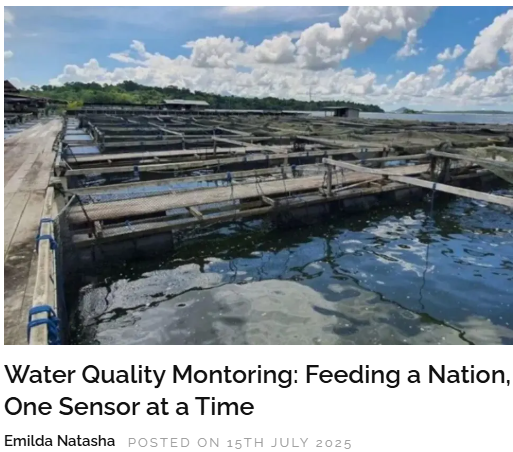
Water Quality Monitoring: Feeding a Nation, One Sensor at a Time
We are proud to share that we contributed a guest post titled “Water Quality Monitoring: Feeding a Nation, One Sensor at a Time” The article explores how IoT Monitoring system is used to help a fish farm in Singapore monitor critical parameter such as dissolved oxygen to lower fish mortality rate and help Singapore achieve the “30 by 30 Goal”
We Speak IoT
We Speak IoT offers a wide range of content, from in-depth articles on connectivity standards and device interoperability to real-world use cases, market trends, and critical takes on the sustainability of tech. It serves as a valuable resource for professionals, tech enthusiasts, and businesses looking to stay informed and inspired by IoT innovations.
Real-life Monitoring Fails and What They Us About IoT
In the world of cold chain logistics, pharmaceuticals, and food safety, refrigeration monitoring is no longer a “nice-to-have” it is a necessity. And yet, time and time again, we see real-life examples of monitoring systems failing when they are needed most. These failures are not just expensive, they can jeopardize public safety, waste high-value inventory, and damage reputations.
So what goes wrong? And how can IoT-based refrigeration monitoring solve the problem? Learn more on refrigeration monitoring here.
Let’s dive into some real-world failures and the lessons they teach us.
Failure #1: Manual Logs Miss Critical Temperature Spikes
The Situation: A pharmaceutical distributor was using manual temperature checks twice a day in their warehouse. Everything looked fine on paper, until a shipment arrived unusable due to prolonged exposure to heat.
What Went Wrong: The cooling system failed for six hours overnight, long enough to damage the goods, but not long enough to be caught before the next manual check.
Lesson Learned: Manual monitoring is not continuous. If you are not tracking in real time, you are missing gaps, and these gaps are where the losses happen.
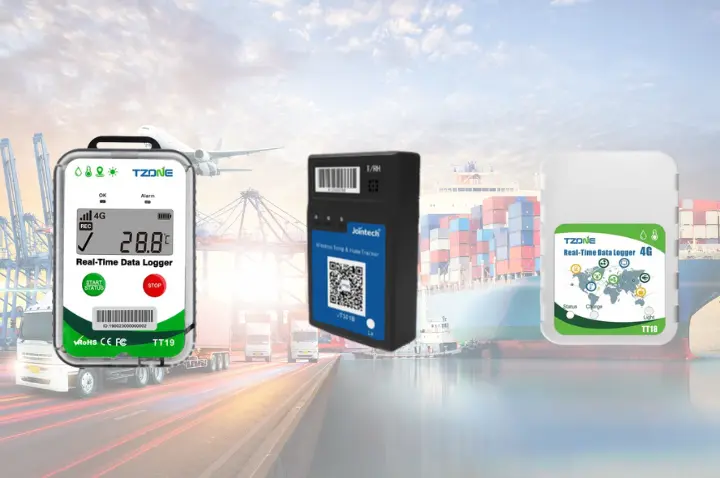
How IoT Helps: IoT refrigeration monitoring systems use real-time sensors that continuously track temperature and humidity. Alerts are triggered the moment values go out of range, even at 3 AM or outside working hours.
Failure #2: No In-Transit Monitoring for Cold Chain Shipment
The Situation: A company shipped frozen food using standard reefer trucks. The onboard refrigeration system malfunctioned mid-journey, and the delivery team only realized when the cargo arrived partially thawed. The transport company had no visibility into what went wrong and could not prove when the failure occurred.
What Went Wrong: There was no live in-transit monitoring or geolocation alerts.
Lesson Learned: The cold chain does not stop at the warehouse. Without tracking during transit, you risk undetected spoilage and costly disputes.
How IoT Monitoring Helps: With mobile-friendly IoT trackers, you can monitor temperature and location in real time, ensuring visibility from warehouse to final delivery.
Failure #3: Lack of Visibility in Multi-Temperature Facilities
The Situation: A food storage facility had cold rooms with different temperature zones (frozen, chilled, ambient). Using a single sensor type and one monitoring system made it impossible to track all areas effectively. Some temperature-sensitive products were stored incorrectly, causing spoilage.
What Went Wrong: Limited sensor diversity and lack of integrated monitoring created gaps.
Lesson Learned: Cold chain monitoring must adapt to varied environments and product needs.
How IoT Monitoring Helps: Flexible IoT platforms support multiple sensor types and zones, providing unified visibility across diverse temperature ranges.
From Failures to Smart Refrigeration Monitoring
These examples show that traditional methods, whether manual or outdated digital tools are no longer enough.
IoT-based refrigeration monitoring is not just about technology. It is about peace of mind, operational efficiency, and protecting high-value products in real time.
Key Features to Look for in a Modern Refrigeration Monitoring System:
24/7 tracking of temperature and humidity
Instant alerts via multiple channels (Telegram, SMS, email)
Smarter QA: Real-Time Visibility in Pharma Warehousing
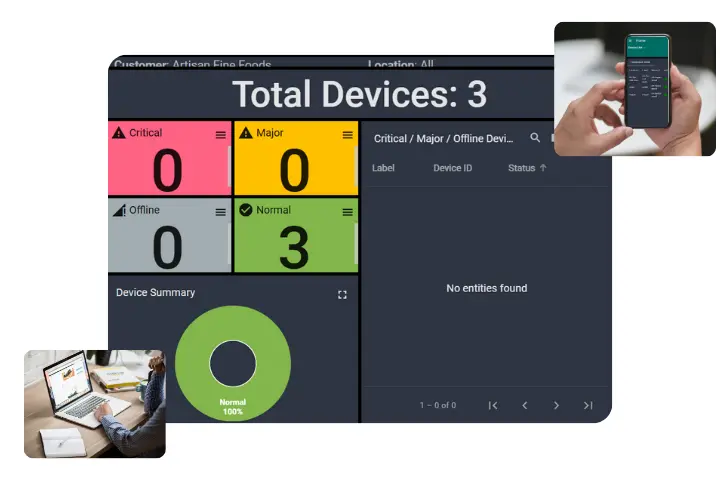
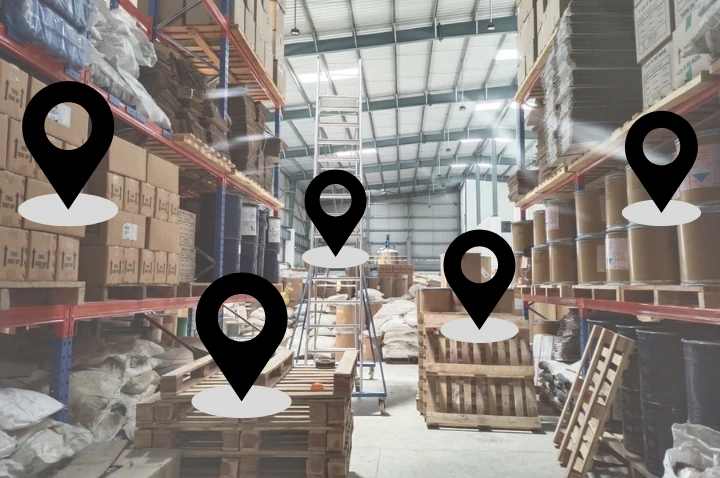
In today’s pharmaceutical warehouses, Quality Assurance (QA) plays a vital role beyond basic compliance. QA teams now oversee product quality, personnel safety, and operational efficiency. Their work starts before each shift, ensuring temperature-sensitive products are properly stored and that staff safely handles materials and equipment. Previously, this required juggling multiple systems. Now, with IOT-ezy’s temperature monitoring and Sentrax’s indoor location tracking, QA teams can manage everything through a single, integrated dashboard.
Connecting Compliance with Movement
What makes this solution uniquely powerful isn’t just the volume of data it collects, but how it intelligently connects temperature, movement, and safety to deliver real operational visibility.
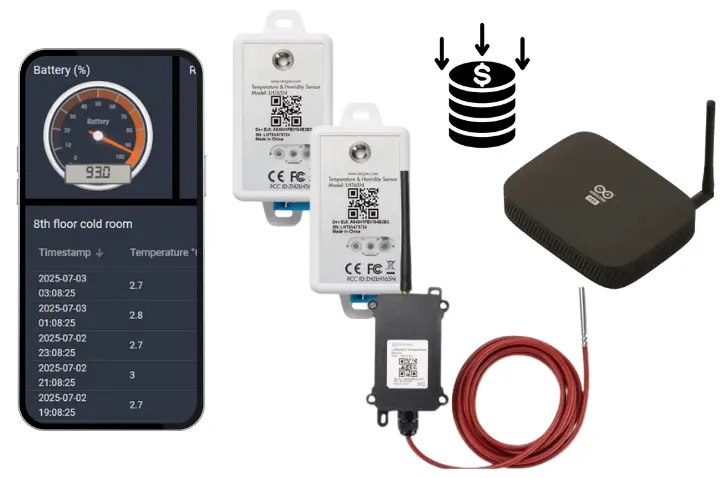
IOT-ezy’s real-time sensors monitor cold rooms, freezers, and storage areas, sending instant alerts if temperatures deviate from set thresholds and enabling quick intervention.
Sentrax’s smart location tags, attached to bins, trolleys, or high-value units, provide precise, real-time tracking down to specific aisles or zones within the warehouse.
From Audit-Ready to Future-Ready
Beyond real-time monitoring, the combined system also provides long-term value through automation and data-driven insights. QA teams can:
Instantly generate and download compliance-ready reports for audits
Prevent product loss or rejection by detecting temperature excursions early
Enhance worker safety through movement monitoring and risk mitigation
Identify inefficiencies and optimize workflows using movement and location data
This approach transforms compliance from a reactive task into a continuous, data-supported process. QA professionals gain full situational awareness and complete control – all from a centralized dashboard.
Integrated Visibility = Operational Confidence
By merging IOT-ezy’s environmental monitoring with Sentrax’s location tracking, this joint solution enables QA leaders to move beyond routine oversight and toward proactive, insight-driven management.
Compliance becomes streamlined and automatic. Safety becomes a measurable, trackable metric. Operational blind spots are eliminated.
This is the future of pharmaceutical warehousing – smarter, safer, and fully visible, in real time, from one unified platform.
LoRaWAN vs. NB-IoT: Which is Better for Remote Monitoring?
As industries increasingly adopt IoT solutions for smarter operations, wireless temperature sensors have become critical in sectors like cold chain logistics, food safety, pharma, agriculture, and environmental monitoring. But the effectiveness of these sensors largely depends on the right connectivity technology.
Two major contenders in this space are LoRaWAN (Long Range Wide Area Network) and NB-IoT (Narrowband IoT). Both are designed for low-power, wide-area network (LPWAN) use cases, but which is the better fit for remote monitoring, especially when deploying wireless temperature sensors?
Remote monitoring involves collecting real-time data like temperature, humidity and more from assets or environment located further from the main control systems such as warehouses or cold storage units. The goal is to make informed decisions, prevent spoilage, and optimize operations.
To make this work, you need:
Reliable wireless temperature sensors
Long-range, low-power communication
Cost-effective connectivity
Scalability for many devices
LoRaWAN: Long Range, Low Power, Local Control
LoRaWAN is a license-free, long-range wireless communication protocol designed for low-power devices.
✅ Pros:
Long Range: Up to 10–15 km in rural areas
Low Power Consumption: Great for battery-powered sensors
No SIM Required: Lower operational costs
Private Networks: You can deploy your own gateway for full control
❌ Cons:
Lower Data Rates: Not suitable for high-frequency or high-volume data
Requires Gateways: You need your own infrastructure unless using public networks
Interference: May face challenges in urban or industrial settings
Best For: Agriculture, smart buildings, and industrial monitoring where power and cost are key concerns.
NB-IoT: Cellular-Based, Highly Reliable
NB-IoT is a cellular-based LPWAN technology that operates on licensed spectrum and integrates with existing mobile networks.
✅ Pros:
Reliable Coverage: Uses established cellular infrastructure
Carrier Support: No need to deploy your own gateways
Secure: Uses standard mobile network encryption and security
Two-Way Communication: Better for remote device management
❌ Cons:
Higher Power Consumption: Devices may need frequent battery changes
Ongoing Costs: SIM cards and data plans increase operational expenses
Less Suitable for Rural Areas: Coverage may still be limited outside cities
Best For: Pharma, healthcare, and urban applications where security and reliability are key.
LoRaWAN vs. NB-IoT for Wireless Temperature Sensors
Feature
LoRaWAN
NB-IoT
Power Efficiency
✅ Excellent
⚠️ Moderate
Range
✅ Long (10–15 km)
⚠️ Depends on cellular coverage
Infrastructure
🛠️ Private or public gateways
📡 Cellular towers
Cost
💰 Lower (no SIMs)
💳 Higher (SIM + subscription)
Scalability
✅ Very high
⚠️ Limited by carrier capacity
Use Case Fit
Farms, factories, cold storage
Hospitals, city infrastructure
Final Verdict: Choose What Fits Your Environment
There is no one-size-fits-all answer. The right choice depends on your application, location, power constraints, and budget.
If you’re deploying wireless temperature sensors in a rural farm, food warehouse, or remote cold chain route, LoRaWAN may be the smarter option. But for hospital refrigeration units or smart cities, NB-IoT offers a plug-and-play solution with higher reliability.
Get your Data Loggers at IOT-ezy
Protect Your Assets and Start Monitoring with Our Clod Platform
How Small Businesses Can Leverage IoT Without Breaking the Bank
The Internet of Things (IoT) is not just a buzzword or a luxury for large enterprises. Today, even small businesses can tap into IoT technologies to improve operations, cut costs, and stay competitive, all without blowing their budget.
In this post, we will explore how small businesses can leverage IoT in practical, cost-effective ways. Find out which temperature data logger suits your business the best.
Why Small Businesses Should Use a Temperature Data Logger
A temperature data logger is a compact electronic device that automatically records temperature readings over time. It stores the data internally or transmits it to a cloud platform, helping businesses monitor conditions without constant manual checks.
These devices are widely used in industries like:
Food and beverage
Healthcare (vaccines, medicine storage)
Cold chain logistics
Manufacturing and warehousing
Why Small Businesses Should Use a Temperature Data Logger
You do not need to run a massive operation to benefit from temperature monitoring. In fact, small businesses often have the most to gain and protect.
Affordable Compliance
Meet health and safety standards such as HACCP, ISO and more without expensive systems.
Prevent Product Loss
Catch temperature issues early and avoid spoilage or product recalls which could cost far more than a data logger ever would.
Remote Monitoring
Many modern temperature data loggers come with Wi-Fi, or cloud connectivity, you can access data anytime and anywhere.
Features to Look for in a Temperature Data Logger
When choosing a device, consider:
Temperature range and accuracy
Data storage capability
Battery life
Connectivity options (Cellular, Wi-Fi)
Alert system (email, Telegram, Whatsapp, SMS)
Ease of data export (PDF, Excel, Cloud)
Comparing Manual Logs vs. Temperature Data Loggers
Feature
Manual Logging
Temperature Data Logger
Accuracy
Prone to human error
High precision readings
Time Required
Labor-intensive
Automated, continuous
Compliance Documentation
Manual reports
Instant digital exports
Real-time Alerts
Not available
Available on most devices
Cost Over Time
Higher (labor, loss)
Lower (automation, savings)
Get your Data Loggers at IOT-ezy
Protect Your Assets and Start Monitoring with Our Clod Platform
AI + IoT: The Future of Predictive Monitoring Is Already Here
In today’s global supply chain, maintaining product quality from source to destination is critical, especially in temperature-sensitive industries like pharmaceuticals, food & beverage, and biotechnology. Cold chain monitoring plays a central role in ensuring that products stay within safe temperature ranges throughout transport and storage. But what if you could predict problems before they happen?
Enter AI + IoT-powered predictive monitoring a game-changing approach that’s redefining cold chain logistics.
What is Predictive Monitoring in Cold Chain?
Predictive monitoring uses artificial intelligence (AI) and Internet of Things (IoT) to analyze real-time and historical data from cold chain assets such as refrigerated trucks, storage units, or cold rooms). Unlike traditional monitoring systems that simply alert you after a failure occurs, predictive monitoring identifies potential risks in advance, helping businesses to act before incidents happen.
How AI + IoT Work Together for Cold Chain Monitoring
IoT sensors are placed in cold chain environments to continuously track conditions like:
Temperature
Humidity
Location
Door open/close status
This real-time data is transmitted to cloud platforms where AI algorithms analyze patterns and detect anomalies. For example, if a refrigerated container starts showing a pattern of fluctuating temperatures before compressor failure, AI can flag this early, preventing potential spoilage and save costs or compliance breaches.
Key Benefits of AI-Driven Predictive Monitoring in Cold Chain
1.Prevent Product Loss
AI helps identify trends that point to future equipment failure, temperature deviations, or human error, reducing spoilage and saving money.
2.Ensure Compliance and Safety
Pharmaceuticals and vaccines must adhere to strict regulations (like HSA, ISO, or GDP). Predictive monitoring ensures that cold chain conditions are maintained consistently, with digital records available for audits.
3.Improve Operational Efficiency
By automating alerts and reducing manual checks, businesses can reallocate labor and reduce inefficiencies.
4.Optimize Maintenance
Predictive maintenance, powered by AI means equipment is serviced when it needs it, not just on a calendar schedule, reducing downtime and extending asset life.
Use Cases of Predictive Monitoring in Cold Chain
Pharmaceutical Distribution: Prevent vaccine or drug spoilage due to minor fluctuations in temperature by predicting equipment failure.
Food Logistics: Avoid contamination or waste in perishable goods by identifying refrigeration issues before transport begins.
Retail & Grocery Chains: Maintain product quality from warehouse to shelf with full visibility across refrigerated supply chains.
Why Predictive Monitoring is the Future of Cold Chain
As global supply chains become more complex and regulations tighter, reactive cold chain monitoring is no longer enough. Predictive monitoring, powered by AI and IoT, offers real-time intelligence that reduces risk, boosts efficiency, and ensures compliance, making it an essential investment for future-proofing your operations.
Shop for Sensors Here
Explore our range of easy-to-install solutions today and start monitoring with confidence.
IoT Monitoring vs Manual Checks: A Cost-Benefit Analysis
In today’s data-driven world, real-time IoT monitoring system is no longer a luxury it is a strategic advantage. But for many businesses, the question remains: Should we invest in IoT monitoring system, or stick with manual checks? This article breaks down the costs and benefits of both to help you make an informed decision. Read more on temperature monitoring system.
IoT (Internet of Things) monitoring refers to using internet-connected sensors to continuously track and report environmental or operational data such as temperature, humidity, motion, power usage, and more. These sensors often feed data to cloud dashboards, such as IOT-ezy plaform, receive alerts through Telegram, Email, Whatsapp and more.
What are Manual Checks?
Manual checks involve human workers regularly inspecting equipment, manually logging measurements (usually on paper or spreadsheets), and reporting anomalies or compliance data by hand.
Cost Benefit Comparison
Factor
IoT Monitoring
Manual Checks
Initial Cost
High (hardware, installation, software)
Low (no tech required)
Ongoing Cost
Low (maintenance, cloud services)
High (labor-intensive, time-consuming)
Data Accuracy
High (automated, consistent)
Variable (subject to human error)
Frequency of Monitoring
Real-time (24/7)
Periodic (hourly, daily or weekly)
Scalability
Easy to scale by adding more sensors
Labor scales linearly with equipment/scope
Response Time
Instant alerts for anomalies
Delayed until next manual inspection
Compliance / Audit-Ready
Automatic logging, timestamps, historical data
Manual logs; harder to track and verify
ROI Over Time
High (especially in critical environments)
Low to moderate (labor-heavy and error-prone)
Human Labor Dependence
Minimal (after setup)
High (ongoing staffing required)
Hidden Cost of Manual Checks
Manual monitoring may seem cheaper upfront, but can carry hidden costs:
Human error: Misreadings, missed inspections
Delayed response: Issues discovered too late (spoiled vaccines, food product not in right temperature resulting in food safety concerns)
Labor costs: Overtime, night shifts, audits
Compliance risk: Missing logs or incomplete data
Limited scalability: Every added site means more staff needed
When IoT Makes Sense
In many warehouses or hospital settings, Wi-Fi coverage can be unreliable or restricted for security reasons. Traditional IoT devices that rely solely on Wi-Fi may lose connection, resulting in gaps in data logging. Now, modern IoT temperature monitoring solutions often use cellular connectivity, such as embedded SIM cards (like 1NCE SIMs), to securely and continuously send data to the cloud, regardless of Wi-Fi availability. This ensures uninterrupted monitoring and full visibility into your cold chain operations.
Conclusion: When Automation Pays Off
While manual checks have a lower barrier to entry, IoT temperature monitoring system delivers higher accuracy, speed, and cost-efficiency over time. For businesses aiming to grow, comply, or operate smarter, the shift to IoT is not just a tech upgrade it is a neccessity.
Start Monitoring with IOT-ezy
Explore our range of easy-to-install solutions today and start monitoring with confidence.
5 Sign Your Monitoring System Needs an IoT Upgrade Now
In industries where temperature control is critical—like food storage, pharmaceuticals, and healthcare—a reliable refrigeration system is the backbone of business operations. However, many companies still rely on outdated methods like manual temperature logging or basic alarms that only alert after a problem has become severe. If you find yourself facing any of the following challenges, it is a strong signal that your refrigeration system needs an IoT upgrade immediately.
1. Frequent Temperature Fluctuations Putting Products at Risk
If your cold storage units are experiencing frequent and unexplained temperature swings, it could mean your current monitoring tools are failing to detect or prevent these issues in time. Temperature deviations, even small ones, can seriously compromise product quality—causing food to spoil or vaccines to lose potency. Traditional monitoring systems often lack the precision and continuous data tracking that IoT sensors provide, making it hard to catch problems before they escalate.
2. Unexpected Equipment Failures and Costly Downtime
Old refrigeration systems without predictive maintenance capabilities often break down unexpectedly, leading to costly interruptions. IoT-enabled monitoring platforms continuously collect data not only on temperature but also on equipment health—like compressor performance or door openings—enabling early detection of faults. This proactive approach reduces downtime and saves money by allowing maintenance teams to fix issues before they cause major failures.
3. Dependence on Manual Temperature Logging
Many facilities still rely on staff to manually record temperatures at scheduled intervals. This process is time-consuming and prone to human error. Missed readings or inaccurate logs can cause compliance issues, especially with strict regulations enforced by authorities like Singapore’s Food Agency (SFA) or Health Sciences Authority (HSA). IoT monitoring automates data collection, ensuring accurate, tamper-proof records that are easily accessible for audits.
4.Lack of Real-Time Alerts Leading to Delayed Responses
Without real-time alerts, temperature excursions might only be noticed hours or even days after they happen, often when damage is already done. IoT systems instantly notify managers via SMS, email, or app notifications as soon as parameters go out of range. This immediate insight allows quick action—whether it is adjusting temperatures, repairing equipment, or moving products to a safe location—preventing costly losses.
5. Poor Connectivity or Wi-Fi Challenges in Your Facility
In many warehouses or hospital settings, Wi-Fi coverage can be unreliable or restricted for security reasons. Traditional IoT devices that rely solely on Wi-Fi may lose connection, resulting in gaps in data logging. Modern IoT refrigeration monitoring solutions often use cellular connectivity, such as embedded SIM cards (like 1NCE SIMs), to securely and continuously send data to the cloud, regardless of Wi-Fi availability. This ensures uninterrupted monitoring and full visibility into your cold chain operations.
Start Monitoring with IOT-ezy
Explore our range of easy-to-install solutions today and start monitoring with confidence.
Food Safe Zone Temperature: Why It Matters for Safety & Compliance
In food safety, temperature control is one of the most critical elements for preventing contamination and meeting compliance standards. Whether you are storing dairy, meat, seafood, or ready-to-eat meals, maintaining products within the food safe zone temperature is not just best practice it is a regulatory requirement. And the most effective way to ensure this? A temperature monitoring system.
How Wireless Temperature Monitoring Save Time and Money
In industries where maintaining precise temperature control is critical, every minute and dollar counts. Traditional temperature monitoring methods can be slow, labor-intensive, and prone to errors, often leading to costly mistakes and inefficiencies. Wireless temperature sensors offer a modern solution that not only simplifies the monitoring process but also delivers significant time and cost savings. In this blog, we’ll explore how these smart devices help businesses streamline operations and protect their valuable assets.
Saving Time with Wireless Temperature Sensors
One of the biggest advantages of wireless temperature sensors is the significant amount of time they save for businesses. Unlike manual temperature logging—which can involve physically checking devices, recording data, and compiling reports—wireless sensors automate the entire process. These sensors continuously collect temperature data and transmit it wirelessly to a centralized dashboard accessible from anywhere, anytime.
This automation eliminates the need for routine manual checks and reduces human error, freeing up valuable staff time to focus on other critical tasks. Installation is also much faster since wireless sensors don’t require complicated wiring or network setup. Simply place the sensor, power it on, and connect to your monitoring system. This quick deployment means less downtime and immediate visibility into your temperature conditions.
Real-time alerts are another time-saving feature. The moment a temperature goes out of range, your team is notified instantly via email, SMS, or app notifications. This proactive approach means you can act quickly to resolve issues before they escalate, avoiding costly disruptions or spoilage.
Cutting Costs with Wireless Temperature Sensors
Besides saving time, wireless temperature sensors help businesses cut costs significantly. First, the reduced need for manual labor translates into direct payroll savings. Staff no longer need to spend hours on data collection or reporting, which means operational efficiencies and lower overheads.
Secondly, wireless sensors are typically battery-powered and designed for long-term use, minimizing maintenance and replacement costs often associated with wired systems. The lack of wiring and complicated installation reduces upfront expenses and eliminates the risk of damage to infrastructure during setup.
Perhaps most importantly, wireless temperature monitoring prevents losses by ensuring products remain within safe temperature ranges. In industries like pharmaceuticals or food storage, even a slight deviation can lead to spoilage, regulatory penalties, or product recalls — all of which are costly. With continuous, accurate monitoring and instant alerts, businesses can avoid these expensive risks.
Real-World Applications and ROI
Companies using wireless temperature sensors often report a strong return on investment. For example, cold chain logistics providers benefit from reduced spoilage and compliance costs, while labs and pharmaceutical companies ensure the integrity of sensitive samples without the overhead of manual checks. The savings in labor, maintenance, and product loss often pay for the wireless monitoring system within months.
Moreover, many systems provide downloadable audit reports, simplifying compliance and reducing time spent on inspections and paperwork — another cost saver.
Scalability and Future-Proofing Your Monitoring System
Another key advantage of wireless temperature sensors is their scalability. As your business grows or monitoring needs change, adding more sensors is easy and cost-effective without the hassle of new wiring or complex installations. This flexibility allows you to expand coverage to new facilities, storage units, or transportation vehicles seamlessly. Wireless systems also future-proof your operations. Many solutions integrate with cloud platforms and offer software updates that improve functionality over time, keeping your monitoring system up-to-date with the latest technology trends. This adaptability means you’re investing not just in today’s needs but also in a solution that evolves with your business, ensuring long-term value and efficiency.
Conclusion
Wireless temperature sensors are not just a technology upgrade — they are a smart business investment that saves both time and money. By automating monitoring, reducing manual labor, preventing costly temperature excursions, and simplifying compliance, these sensors help companies operate more efficiently and protect their bottom line.
If your business relies on accurate temperature control, switching to wireless temperature sensors can transform your monitoring processes, giving you peace of mind and a clear financial advantage.
Ready to save time and money with wireless temperature sensors?
Explore our range of easy-to-install solutions today and start monitoring with confidence.