From IoT Sensors to Cloud Platforms: Building an End-to-End Cold Chain Monitoring Solution in Singapore
Introduction
Cold chain monitoring in Singapore requires more than just temperature sensors. To meet regulatory standards and operational demands, businesses need an end-to-end IoT solution that connects reliable hardware with a secure, scalable cloud platform.
This approach ensures continuous monitoring, real-time alerts, and audit-ready records — all critical for industries such as food services, healthcare, pharmaceuticals, and cold storage logistics.
The Role of IoT Hardware in Cold Chain Monitoring

At the foundation of any cold chain system is IoT hardware — temperature sensors, probes, gateways, and communication devices installed in:
- Cold rooms and freezers
- Refrigerators and chillers
- Warehouses and storage facilities
- Refrigerated transport units
High-quality IoT hardware ensures:
- Accurate temperature readings
- Stable data transmission
- Long-term reliability in harsh environments
IOT hardware suppliers provide industrial-grade IoT sensors and devices that are suitable for cold chain applications, forming the critical data collection layer of the system.
Why Hardware Alone Is Not Enough
While sensors collect temperature data, compliance and operational visibility depend on what happens after the data is captured.
Without a cloud platform:
- Data remains siloed
- Alerts are delayed or manual
- Reporting is time-consuming
- Compliance audits become stressful
This is where a cloud-based IoT monitoring platform and system integration become essential.
Connecting IoT Hardware to a Cloud Monitoring Platform
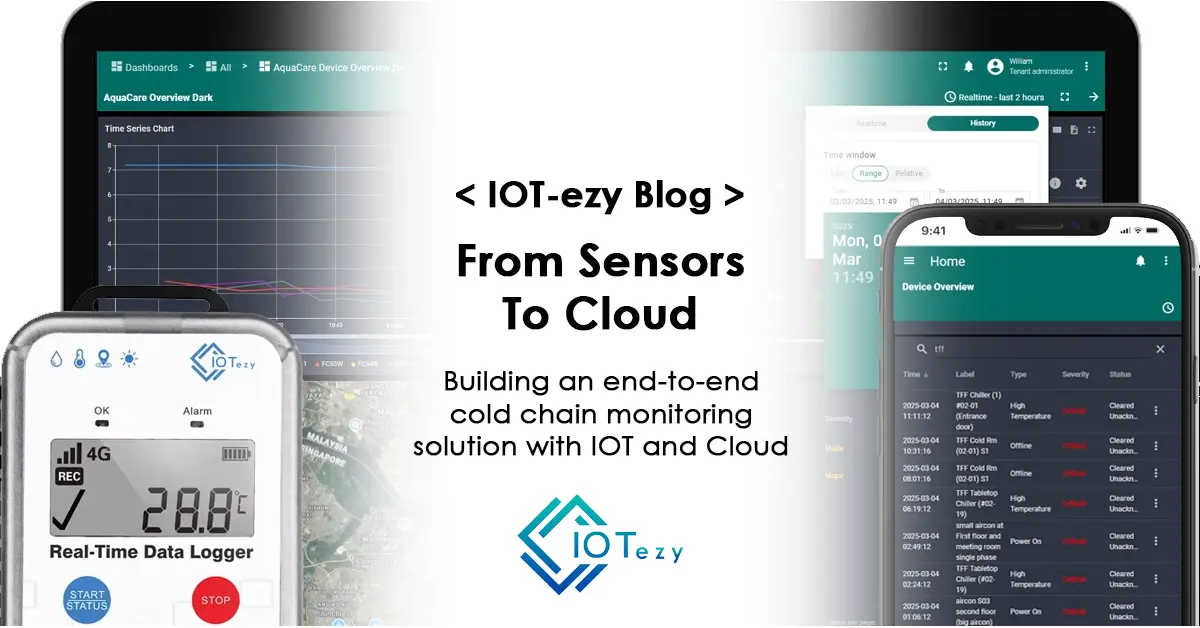
A complete cold chain solution integrates IoT hardware with a cloud platform that provides:
- Real-time dashboards
- Automated alerts via SMS, email, or app
- Centralised data storage
- Customisable compliance reports
- User access control and audit trails
As a cloud platform provider and system integrator, we focus on connecting third-party IoT hardware into a unified monitoring system that meets Singapore’s regulatory requirements.
This hardware-agnostic approach allows businesses to select suitable sensors while ensuring data is reliably collected, transmitted, and transformed into actionable insights.
Supporting Cold Chain Compliance in Singapore

Singapore regulators require:
- Continuous temperature monitoring
- Accurate, time-stamped records
- Proper documentation for audits
- Rapid response to temperature excursions
By combining:
- Reliable IoT hardware from trusted suppliers, and
- A cloud-based monitoring and reporting platform
organisations can achieve compliance while improving operational efficiency and reducing risk.
A Practical, Scalable Approach to Cold Chain IoT
An effective cold chain IoT strategy involves:
- Selecting appropriate temperature sensors and gateways
- Integrating them with a secure cloud platform
- Configuring alerts and reporting based on compliance needs
- Scaling across multiple locations as operations grow
This layered approach ensures flexibility, avoids vendor lock-in, and supports long-term scalability.
Conclusion
Cold chain monitoring is most effective when IoT hardware and cloud platforms work together.
By pairing industrial-grade sensors from specialised hardware suppliers with a robust cloud monitoring platform and system integration, businesses in Singapore can build reliable, compliant, and future-ready cold chain solutions.